HR Management Models Presentation Keynote Template




HR Management Models Presentation Keynote Template
Unveiling the Power of the HR Management Models Presentation Keynote Template
Optimizing your human resources strategies is crucial for driving organizational success, and the "HR Management Models Keynote Template" is designed to help you achieve this goal. This comprehensive template is tailored to present HR management theories, models, and best practices with clarity and impact, making it an indispensable tool for HR professionals.
Featuring a modern design and intuitive layout, this template offers a perfect platform for outlining various HR frameworks, including performance management systems, talent management processes, and organizational development strategies. The visual appeal and structured format ensure that your presentations are not only informative but also engaging for your audience.
Whether you are engaging stakeholders, training your HR team, or reporting to leadership, the HR Management Models Keynote Template equips you with the tools needed to effectively communicate complex HR concepts. The customizable nature of the template allows you to tailor your presentations to specific audiences, ensuring that your message is always relevant and impactful.
By leveraging this template, you can streamline your HR presentations, making it easier to convey the importance of strategic HR management and its role in achieving organizational goals. Ultimately, this template helps you drive home the significance of HR management models, fostering a deeper understanding and appreciation among your audience, and paving the way for enhanced organizational performance.
What’s Inside the Template?
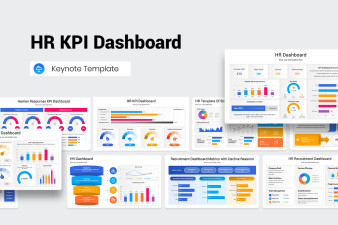
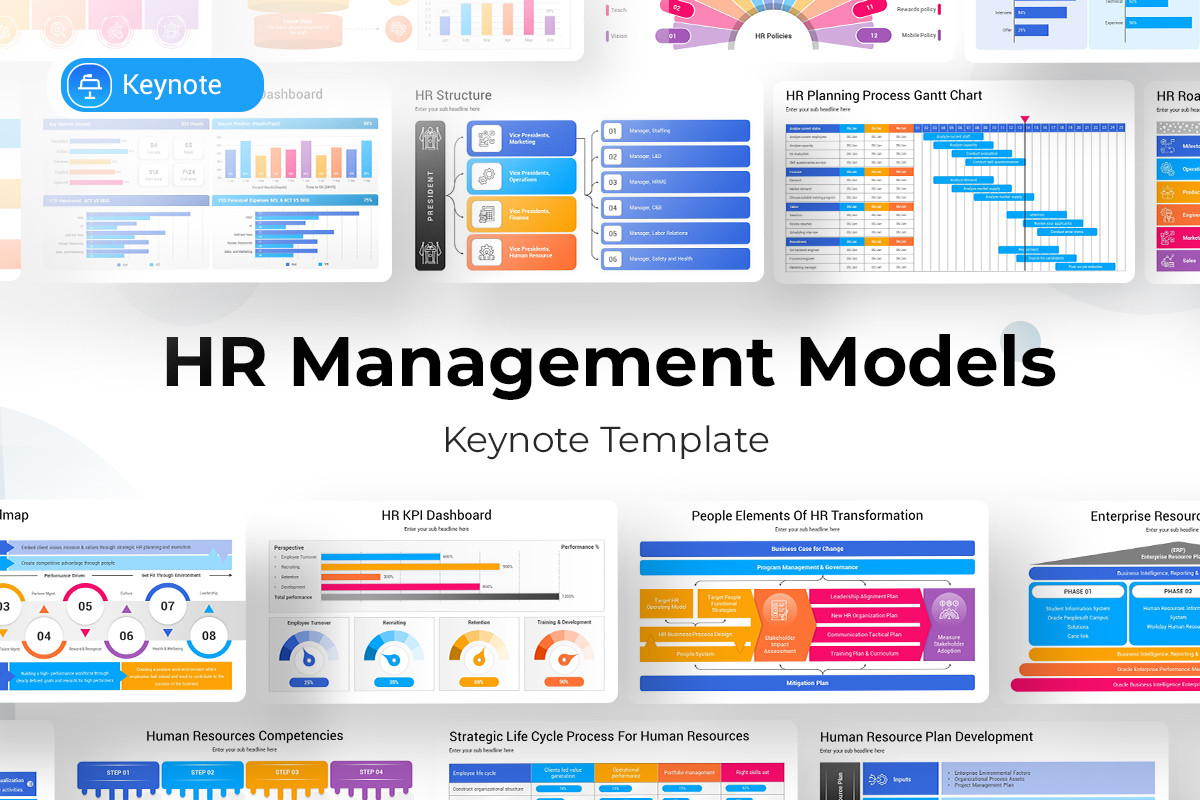
HR KPI Dashboard: A visual representation of key performance indicators (KPIs) to monitor and assess HR activities, providing insights into employee performance and HR efficiency.
HR Processes: A breakdown of essential HR processes, including recruitment, training, performance management, and employee relations, ensuring streamlined HR operations.
HR Analytics: The use of data analysis to make informed decisions about recruitment, employee engagement, and HR strategies, optimizing workforce performance.
Strategic Human Resources (HR): Focuses on aligning HR activities and initiatives with the strategic goals of the organization, ensuring HR adds value to business outcomes.
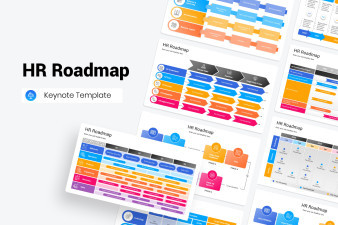
HR Roadmap: A strategic plan that outlines the key HR initiatives, timelines, and goals, guiding the HR function toward long-term success.
Human Resources (HR) Training: Frameworks and models for developing effective HR training programs that support employee growth, skill development, and organizational performance.
Human Resources (HR) Plan: A comprehensive plan that outlines HR goals, strategies, and actions needed to address workforce needs and improve overall HR effectiveness.
HR Structure: Defines the organization and hierarchy of HR departments, roles, and responsibilities, ensuring clear accountability within the HR function.
HR Scorecard: A strategic tool used to measure and track HR performance against established metrics, aligning HR goals with business objectives.
HR Metrics: The use of quantitative data to track HR performance, assess employee engagement, and identify areas for improvement within HR operations.
HR Strategy Roadmap: A strategic guide outlining key HR initiatives and milestones, ensuring that HR activities align with the organization's overall goals.
Human Resource (HR) Forecasting: Predicts future workforce needs based on business trends, helping HR professionals prepare for hiring, training, and development.
HR Goals: Clearly defined objectives within the HR function that drive organizational success, focusing on recruitment, retention, and employee development.
HR Challenges: Identifies common HR challenges such as talent acquisition, employee retention, and compliance, offering strategies to overcome them.
HR as Business Partner: Positioning HR as a strategic partner in the business, aligning HR strategies with overall organizational goals to add maximum value.
Human Resource (HR) Strategy: A framework for developing and implementing HR strategies that support business objectives and contribute to organizational success.
Human Resource (HR) Policies: A set of guidelines and rules governing HR practices, ensuring consistency and fairness in the treatment of employees.
HR Transformation: The process of redesigning and modernizing HR functions to improve efficiency, employee satisfaction, and organizational performance.
HR Shared Services: A model that consolidates HR services into one central function, improving efficiency and reducing costs across the organization.
HR Plan Development: The process of creating a comprehensive HR plan that aligns with business goals, optimizes workforce performance, and addresses HR challenges.
HR Operating Model: Defines how HR functions are organized and managed within the business, ensuring alignment with strategic objectives and maximizing HR effectiveness.
HR Model: A strategic framework outlining HR practices, policies, and processes, ensuring that HR aligns with business goals and drives organizational success.
HR Functions: A detailed overview of the core HR functions such as recruitment, training, employee relations, and performance management.
HR Competencies: Key skills and competencies required for HR professionals to perform effectively, including leadership, communication, and strategic thinking.
High Impact HR: A model focused on optimizing HR initiatives and practices to achieve a significant and measurable impact on the organization.
Evolution of HR: An overview of how the HR function has evolved over time, from administrative tasks to a strategic business partner.
HR Value Chain: A framework that outlines how HR activities contribute to the overall value of the organization, from recruitment to employee development.
HR Outsourcing: The practice of outsourcing certain HR functions, such as payroll or recruitment, to external providers, allowing HR to focus on strategic initiatives.
Enterprise Resource Planning: A system used to manage HR operations alongside other business functions, providing a unified platform for HR data and processes.
HR Business Partner KPI: Key performance indicators (KPIs) for HR business partners, measuring their contribution to business success and aligning HR activities with organizational goals.
Key Features:
- 389 Clean & Creative slides
- 2 Aspect Ratio ( 4:3 & 16:9 )
- Just One Click to change the colors and auto recolored
- Free Fonts and Icons
- Fully and Easily editable content
- 3000+ Icons! easily change size & color
PowerPoint and Google Sides version is available
Please sign to comment this item.
Report This Item
Please sign in to report this item.
 Belek
Belek
 jack-des
-Presentation-Keynote-Template001.jpg)